

Ever wonder how industries get pure oxygen, nitrogen, or argon? It all starts with an air separation unit. These systems take regular atmospheric air and break it down into its core components. We work with these systems regularly, and they never stop amazing us. The technology behind them is both complex and fascinating. Whether you run a power plant or a manufacturing facility, understanding how these units work helps you make smarter decisions about your operations.
What Is an Air Separation Unit and Why Does It Matter?
An air separation unit is basically a giant machine that pulls apart air into separate gases. The atmosphere around us contains roughly 78% nitrogen, 21% oxygen, and small amounts of other gases. These units capture that air and isolate each component for industrial use.
We have seen firsthand how critical these systems are for countless industries. Hospitals need medical-grade oxygen. Steel mills require nitrogen for their processes. Food packaging companies use these gases to keep products fresh longer. Without a properly functioning air separation unit, many modern industries would simply grind to a halt. The technology touches more of our daily lives than most people realize.
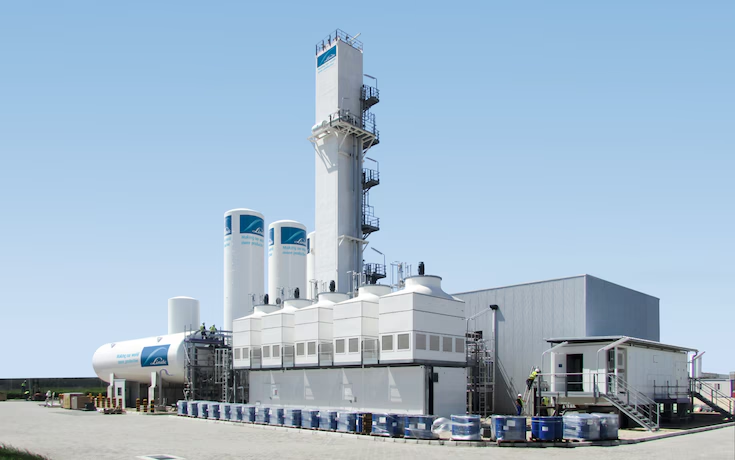
The Cryogenic Air Separation Process Explained
The cryogenic air separation method is the most common approach we encounter in the field. This process works by cooling air to extremely low temperatures. We are talking around negative 300 degrees Fahrenheit. At these temperatures, different gases turn into liquids at different points.
The separation process starts when compressed air enters the system. First, impurities like carbon dioxide and water vapor get removed. Then the clean air cools down through heat exchangers. Once cold enough, the air enters a distillation column. Here, each gas separates based on its unique boiling point. Nitrogen rises to the top while oxygen collects at the bottom. It is surprisingly elegant once you understand the basics.
Understanding ASU Design and Process Designs
Every air separation unit we work with has a specific design matched to its purpose. The ASU design depends heavily on what gases the facility needs most. Some plants prioritize oxygen production. Others focus mainly on nitrogen output. Computer-aided engineering helps modern designers optimize every component for maximum efficiency.
Different process designs serve different needs. High-purity applications require more complex distillation setups. Meanwhile, simpler designs work fine for basic industrial gas needs. We always recommend consulting with specialists before choosing a system. The right design saves money and headaches down the road.
Industrial Gas Production: Oxygen, Nitrogen, and Argon
A single air separation unit can produce multiple valuable gases simultaneously. Oxygen feeds combustion processes and supports medical applications. Nitrogen serves countless manufacturing purposes. Argon, though present in smaller quantities, proves essential for welding and electronics manufacturing.
The beauty of modern cryogenic air separation unit technology lies in its efficiency. Nothing goes to waste. Each gas stream gets captured, purified, and stored for use. We have helped facilities optimize their production to match their specific consumption patterns. Getting the balance right means lower operating costs and better overall performance from your system.
Trustindex verifies that the original source of the review is Google. My ducks were clean! read to fly in the air. Thanks Air Duck CleaningPosted onTrustindex verifies that the original source of the review is Google. Exceptional duct replacement service! Courteous staff, quick installation, and fair pricing. They exceeded my expectations. Highly satisfied!Posted onTrustindex verifies that the original source of the review is Google. I recently used AirTech to unclog my dryer ventilation, sanitize my AC plenum, and reseal some leaky areas around my AC plenum. The tech who came out, Sergio, was amazing. He explained everything very well and took pictures of the inside of my AC and dryer ventilation to show the difference his service made. Sergio was very friendly, showed up right on time, and was able to answer any questions that came up. The price that AirTech charged was very reasonable and way better than some other companies I called. I would not hesitate to call them again for anything HVAC related.Posted onTrustindex verifies that the original source of the review is Google. Technician was very professional and the company was very upfront with charges. He cleaned the commercial vents. I'd recommend them to anyone looking for commercial vents cleaning!Posted onTrustindex verifies that the original source of the review is Google. AirTech - Air Vent Cleaning was able to get me in asap because my parents are coming in from out of town and my father has COPD and half of his lung is missing. They were on time professionals and kept me informed during the process. They did a great job and left everything clean and neat when they were done. I recommend them to anyone who wants to get their ducts, and furnace cleaned and sanitized. Thank you!Posted onTrustindex verifies that the original source of the review is Google. Great experience with AirTech - Air Vent Cleaning. Scheduling was easy and appreciated the reminder calls. AirTech - Air Vent Cleaning Specialists arrived promptly and thoroughly explained the process. Both were very courteous and kindly used shoe covers while in my home. They very efficiently completed the service and shared before and after photos of the ducts that were serviced. Price was reasonable and service was provided with the utmost professionalism. Thanks!Posted onTrustindex verifies that the original source of the review is Google. AirTech - Air Vent Cleaning Techs were professional and pleasant to deal with. They did a good job of caring for my home by using drop cloths as needed and wore protective "booties". Duct, vent and furnace cleaning went well.
The Working Principle Behind N2 and O2 Separation
The working principle here relies on simple physics. N2 and O2 have different boiling points. Nitrogen boils at a lower temperature than oxygen does. This difference makes separation possible inside the distillation column.
Here is what happens inside a typical air separation unit:
- Compressed air gets cleaned and dried thoroughly
- The air cools down through multiple heat exchange stages
- Liquefied air enters the distillation column
- Nitrogen vaporizes first and exits from the top
- Oxygen remains liquid longer and collects below
This straightforward principle has powered gas production for over a century. The technology keeps improving, but the core science stays the same.
Get A Free Estimate

Air Separation Unit Applications in Power Plants and Combustion
Power plants represent one of the biggest users of air separation unit technology. These facilities need massive amounts of oxygen to improve combustion efficiency. More efficient burning means more power generated from the same amount of fuel. It also means lower emissions, which matters more every year.
We have worked with several power plants upgrading their gas supply systems. The results speak for themselves. Facilities using high-purity oxygen see significant improvements in their operations. Some integrated gasification combined cycle plants simply cannot function without a reliable air separation unit on site. The industrial gas supply becomes as critical as the fuel itself.
Maintenance Tips to Keep Your Air Separation Unit Running Smoothly
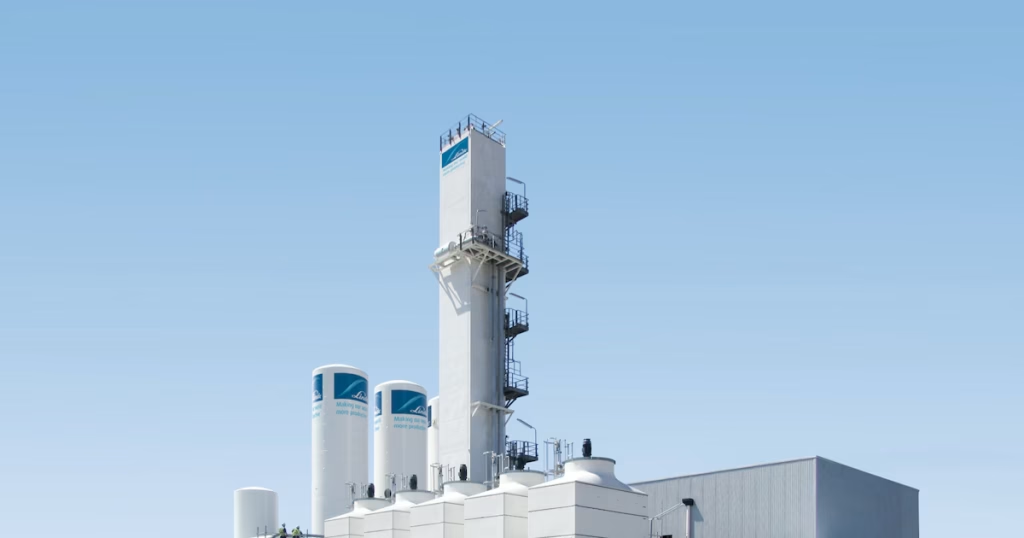
Regular maintenance keeps your air separation unit performing at peak efficiency. We cannot stress this enough. These systems run continuously under demanding conditions. Small problems become big problems fast if you ignore them.
Start with the basics. Keep air intake filters clean and replace them on schedule. Check compression systems for wear regularly. Monitor heat exchangers for any efficiency drops. The cryogenic components need special attention, too. Ice buildup or insulation damage causes major performance issues. We recommend professional inspections at least twice yearly for most facilities. Catching problems early saves thousands in emergency repairs.
Trust the Professionals for Your ASU Needs
Look, we get it. Operating an air separation unit involves serious investment and responsibility. These systems are too important and too complex for guesswork. That is why working with experienced professionals makes such a difference. We have spent years learning the ins and outs of these machines.
Whether you need routine maintenance or major repairs, expert help pays off. Professional technicians understand every component in your air separation unit. They spot problems before they cause shutdowns. They optimize performance to save you money. Most importantly, they keep your operations running safely and efficiently. Your facility deserves that level of care and expertise.
Frequently Asked Questions
Q: How much does an air separation unit typically cost to install?
A: Installation costs vary widely based on capacity and design requirements. Small units might cost a few million dollars. Large industrial installations can run into hundreds of millions. The specific gases you need and purity levels affect pricing significantly. Most suppliers offer detailed quotes after assessing your facility requirements. Operating costs depend on electricity prices and maintenance schedules.
Q: How long does an air separation unit last with proper maintenance?
A: Well-maintained units typically operate for 25 to 40 years. Some facilities run even longer with major component upgrades along the way. Regular maintenance extends lifespan significantly. The distillation columns and heat exchangers usually last the longest. Compressors and rotating equipment need replacement more frequently. Following manufacturer guidelines helps maximize your investment.
Q: Can an air separation unit produce medical-grade oxygen?
A: Yes, many units produce oxygen meeting medical standards. The system requires additional purification steps for medical applications. Strict quality control protocols must be followed throughout production. Regulatory agencies certify facilities for medical gas production separately. Not every industrial unit qualifies without modifications. Talk to your supplier about specific medical-grade requirements.
Q: What safety concerns exist with air separation units?
A: Cryogenic temperatures pose the biggest safety risk. Contact with super-cold surfaces causes severe frostbite instantly. Oxygen-enriched atmospheres increase fire hazards dramatically. Nitrogen-rich environments can cause asphyxiation without warning. Proper training and safety equipment protect workers effectively. Regular safety audits identify potential hazards before accidents occur.
Q: How much space does an air separation unit require?
A: Space requirements depend entirely on production capacity. Small units might fit in a few thousand square feet. Major industrial installations occupy several acres. Vertical distillation columns need significant height clearance, too. Site planning should account for maintenance access and future expansion. Work with engineers early to determine your specific footprint needs.
Q: How energy-efficient are modern air separation units?
A: Modern units achieve much better efficiency than older designs. Computer-aided optimization has improved performance dramatically over the decades. Energy consumption still represents the highest operating cost, though. Typical units use 0.4 to 0.5 kWh per cubic meter of oxygen produced. Waste heat recovery systems help offset some energy costs. Newer installations continue pushing efficiency boundaries further.
Proudly Serving
These Areas
- Orlando, FL
- Lake Nona, FL
- Dr. Philips, FL
- Hunter's Creek, FL
- Heathrow, FL
- Oviedo, FL
- Baldwin Park, FL
- Saint Cloud, FL
- Kissimmee, FL
- College Park, FL
- Windermere, FL
- Winter Park, FL
At Air Duct Cleaning AP, we are committed to providing high-quality air duct services to homes and businesses throughout Orlando. With years of experience in the industry, our team of skilled professionals ensures your HVAC system operates efficiently and delivers clean fresh air.
We specialize in air duct cleaning, installation, inspection, repair, replacement, UV light installation, and sealing, using state-of-the-art equipment and advanced techniques. Our goal is to improve indoor air quality, enhance energy efficiency, and create a healthier living and working environment for our customers.