

Getting your air ducts sized correctly makes a huge difference in home comfort. Too small, and your system works overtime. Too big, and you waste energy and money. HVAC duct sizing determines how well air moves through your home. It affects everything from temperature consistency to your monthly utility bills. In this guide, we break down CFM charts, duct dimensions, and the calculations you need. Whether you are installing new ductwork or checking your current setup, understanding these basics helps you make smart decisions.
What Is HVAC Duct Sizing and Why Does It Matter?
HVAC duct sizing refers to choosing the right diameter or dimensions for your air ducts. This process ensures your heating and cooling system delivers air efficiently. When ducts are too small, air struggles to flow properly. Your HVAC unit works harder, wears out faster, and your energy bills climb.
On the flip side, oversized ducts create their own problems. Air moves too slowly, which reduces system efficiency. You might notice uneven temperatures throughout your home. Proper HVAC duct sizing balances airflow, velocity, and pressure. It keeps every room comfortable without straining your equipment. Think of it like choosing the right size pipe for water flow. The wrong size causes problems either way.
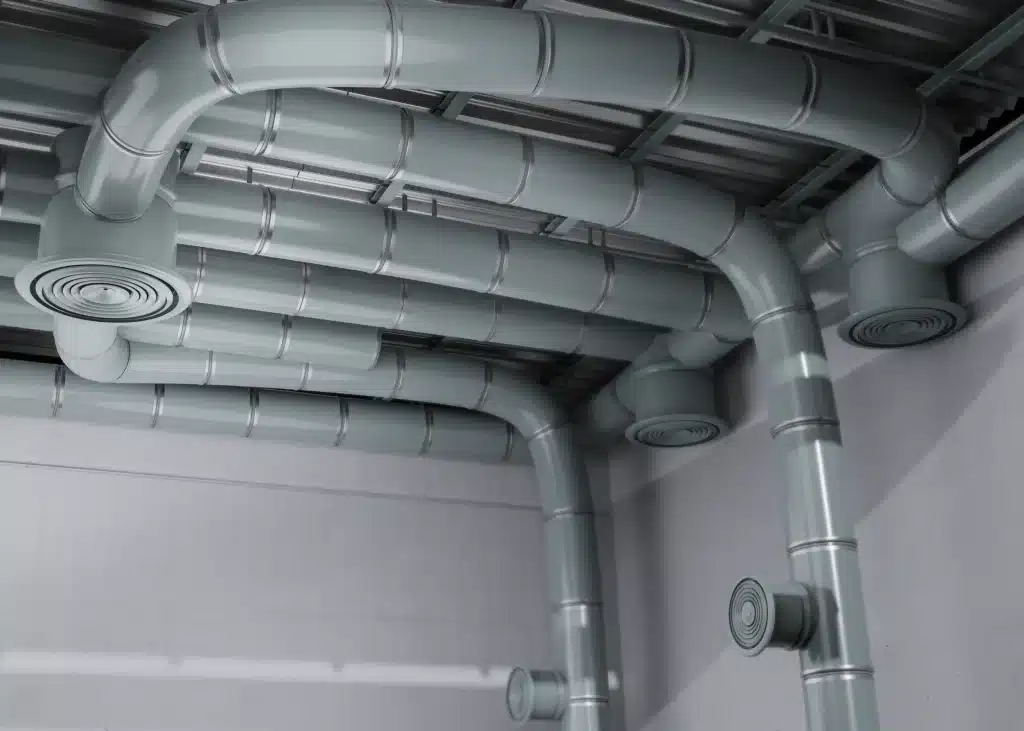
Understanding CFM Charts for HVAC Duct Sizing
CFM stands for cubic feet per minute. It measures how much air flows through your system. CFM charts help you match airflow requirements to the right duct size. These charts show the relationship between air volume, duct dimensions, and velocity.
Most professionals use CFM charts daily for HVAC duct sizing projects. You find your required CFM on one axis and your preferred velocity on another. Where they meet tells you the duct diameter you need. Higher CFM needs larger ducts to maintain proper airflow. Lower CFM works fine with smaller ducts. These charts take the guesswork out of the calculation process.
How to Calculate Duct Size Using CFM
Ready to calculate duct size yourself? Start by determining your room’s CFM requirement. Generally, you need about 1 CFM per square foot of living space. A 200 square foot room needs roughly 200 CFM of airflow.
Next, decide on your target velocity. For supply ducts, aim for 600 to 900 feet per minute. Return ducts work best at 400 to 600 feet per minute. Now use this formula: Duct Area = CFM ÷ Velocity. Convert that area to diameter for round ducts. For example, 200 CFM at 700 FPM needs about a 7-inch round duct. This HVAC duct sizing calculation gets you in the right ballpark.
Using a Ductulator or Duct Size Calculator
A ductulator is a handy tool that simplifies HVAC duct sizing. It is basically a circular slide rule designed for HVAC professionals. You dial in your CFM and friction loss rate. The ductulator shows you the corresponding duct size instantly. Many technicians carry one in their tool bag.
Prefer digital tools? A duct size calculator does the same job online. You enter your airflow requirements and system parameters. The calculator handles the math automatically. These tools account for friction loss, velocity limits, and duct shape. They are perfect for homeowners who want to double-check a contractor’s recommendations. Either option beats doing complex calculations by hand.
Trustindex verifies that the original source of the review is Google. My ducks were clean! read to fly in the air. Thanks Air Duck CleaningPosted onTrustindex verifies that the original source of the review is Google. Exceptional duct replacement service! Courteous staff, quick installation, and fair pricing. They exceeded my expectations. Highly satisfied!Posted onTrustindex verifies that the original source of the review is Google. I recently used AirTech to unclog my dryer ventilation, sanitize my AC plenum, and reseal some leaky areas around my AC plenum. The tech who came out, Sergio, was amazing. He explained everything very well and took pictures of the inside of my AC and dryer ventilation to show the difference his service made. Sergio was very friendly, showed up right on time, and was able to answer any questions that came up. The price that AirTech charged was very reasonable and way better than some other companies I called. I would not hesitate to call them again for anything HVAC related.Posted onTrustindex verifies that the original source of the review is Google. Technician was very professional and the company was very upfront with charges. He cleaned the commercial vents. I'd recommend them to anyone looking for commercial vents cleaning!Posted onTrustindex verifies that the original source of the review is Google. AirTech - Air Vent Cleaning was able to get me in asap because my parents are coming in from out of town and my father has COPD and half of his lung is missing. They were on time professionals and kept me informed during the process. They did a great job and left everything clean and neat when they were done. I recommend them to anyone who wants to get their ducts, and furnace cleaned and sanitized. Thank you!Posted onTrustindex verifies that the original source of the review is Google. Great experience with AirTech - Air Vent Cleaning. Scheduling was easy and appreciated the reminder calls. AirTech - Air Vent Cleaning Specialists arrived promptly and thoroughly explained the process. Both were very courteous and kindly used shoe covers while in my home. They very efficiently completed the service and shared before and after photos of the ducts that were serviced. Price was reasonable and service was provided with the utmost professionalism. Thanks!Posted onTrustindex verifies that the original source of the review is Google. AirTech - Air Vent Cleaning Techs were professional and pleasant to deal with. They did a good job of caring for my home by using drop cloths as needed and wore protective "booties". Duct, vent and furnace cleaning went well.
Why Square Footage Matters for Your HVAC Unit
Your home’s square footage directly impacts ductwork requirements. Larger homes need more airflow to maintain comfort. That means bigger ducts or more duct runs throughout the space. HVAC duct sizing always starts with understanding your total area.
Here is a rough guide for CFM based on square footage:
- 500 sq ft: approximately 500 CFM needed
- 1,000 sq ft: approximately 1,000 CFM needed
- 1,500 sq ft: approximately 1,500 CFM needed
- 2,000 sq ft: approximately 2,000 CFM needed
These numbers help you size your HVAC unit and ductwork together. An undersized system cannot push enough air through properly sized ducts. Everything needs to work as a balanced system for best results.
Get A Free Estimate

Typical Duct Sizes for Return and Supply Lines
Supply and return ducts serve different purposes. Supply ducts push conditioned air into your rooms. Return ducts pull air back to the HVAC unit for reconditioning. Each type has typical duct sizes based on system capacity.
Supply ducts commonly range from 4 to 12 inches in diameter. Smaller branch lines feed individual rooms. Main trunk lines run larger to handle total system airflow. Return ducts tend to be bigger overall. They often measure 14 to 20 inches for residential systems. Proper HVAC duct sizing means matching both supply and return to your specific needs. Balanced airflow keeps pressure neutral throughout your home.
Velocity and Friction Loss Explained
Velocity describes how fast air moves through your ducts. Higher velocity means air travels quicker. However, faster is not always better. High velocity increases friction loss and creates noise. Your system works harder to push air through.
Friction loss happens when air rubs against duct walls. Longer runs and rough surfaces increase this resistance. HVAC duct sizing accounts for friction loss in every calculation. Professionals typically design for 0.08 to 0.1 inches of water column per 100 feet. Keeping velocity and friction loss balanced improves efficiency. It also makes your system quieter and extends equipment life.
- The thermostat senses a temperature change
- The system activates heating or cooling mode
- Blower fan pushes air through ductwork
- Conditioned air enters rooms through vents
- Return vents pull air back for reconditioning
Why Proper HVAC Duct Sizing Improves Heating and Air Conditioning
Getting HVAC duct sizing right affects your entire heating and air conditioning system. Correct sizing ensures even temperatures in every room. Your equipment runs efficiently without unnecessary strain. Energy bills stay reasonable because the system is not fighting itself.
Poor duct sizing causes hot and cold spots throughout your home. You might crank the thermostat trying to compensate. That just wastes energy and money. Properly sized ductwork also improves indoor air quality. Air flows smoothly through filters without bypassing them. When planning any HVAC project, make duct sizing a priority. It is the foundation of a comfortable, efficient home.
Frequently Asked Questions
Q: What happens if my ducts are too small for my HVAC system?
A: Undersized ducts restrict airflow and force your system to work harder. You will notice weak airflow from vents and inconsistent temperatures. Your energy bills increase while comfort decreases. The extra strain also shortens equipment lifespan significantly.
Q: Can I use flexible ducts instead of rigid metal ducts?
A: Yes, flexible ducts work for many applications. They are easier to install in tight spaces. However, they create more friction loss than smooth metal ducts. Keep runs short and avoid sharp bends for best performance.
Q: How do I know if my existing ducts are sized correctly?
A: Check for warning signs like uneven room temperatures or weak airflow. Listen for whistling or rushing sounds from vents. An HVAC professional can test airflow and pressure to confirm proper sizing.
Q: Does duct shape affect airflow efficiency?
A: Absolutely. Round ducts offer the least friction and best airflow. Rectangular ducts fit better in tight spaces but create more resistance. Oval ducts provide a middle ground between the two options.
Q: How often should ductwork be inspected or replaced?
A: Have ducts inspected every 3 to 5 years. Well-maintained ductwork lasts 15 to 25 years. Look for visible damage, disconnected sections, or excessive dust buildup as signs you need service.
Q: Should return ducts be larger than supply ducts?
A: Generally, yes. Return ducts handle air at lower velocity and need more area. A good rule is making return duct area 10 to 20 percent larger than total supply duct area for balanced pressure.
Proudly Serving
These Areas
- Orlando, FL
- Lake Nona, FL
- Dr. Philips, FL
- Hunter's Creek, FL
- Heathrow, FL
- Oviedo, FL
- Baldwin Park, FL
- Saint Cloud, FL
- Kissimmee, FL
- College Park, FL
- Windermere, FL
- Winter Park, FL
At Air Duct Cleaning AP, we are committed to providing high-quality air duct services to homes and businesses throughout Orlando. With years of experience in the industry, our team of skilled professionals ensures your HVAC system operates efficiently and delivers clean fresh air.
We specialize in air duct cleaning, installation, inspection, repair, replacement, UV light installation, and sealing, using state-of-the-art equipment and advanced techniques. Our goal is to improve indoor air quality, enhance energy efficiency, and create a healthier living and working environment for our customers.