

You spend a lot of time inside your home. But have you ever thought about what you’re breathing? Indoor air quality affects your health more than most people realize. I’ve worked with countless homeowners who had no idea their symptoms came from their own living space. The good news is that fixing this problem isn’t complicated. With some simple changes, you can breathe easier and feel better. Let’s walk through everything you need to know about making your home healthier.
What Is Indoor Air Pollution
Indoor air pollution happens when harmful particles and gases build up inside buildings. Your home traps these contaminants because modern construction keeps spaces sealed tight. This sounds great for energy bills, but it creates problems for breathing.
I’ve tested homes where the inside was actually worse than the outside. That surprised a lot of homeowners. Without proper ventilation, pollutants just circulate through your rooms over and over. Everything from cooking fumes to cleaning products contributes to the problem. Understanding this is the first step toward better indoor air quality.
Sources of Indoor Air Pollution
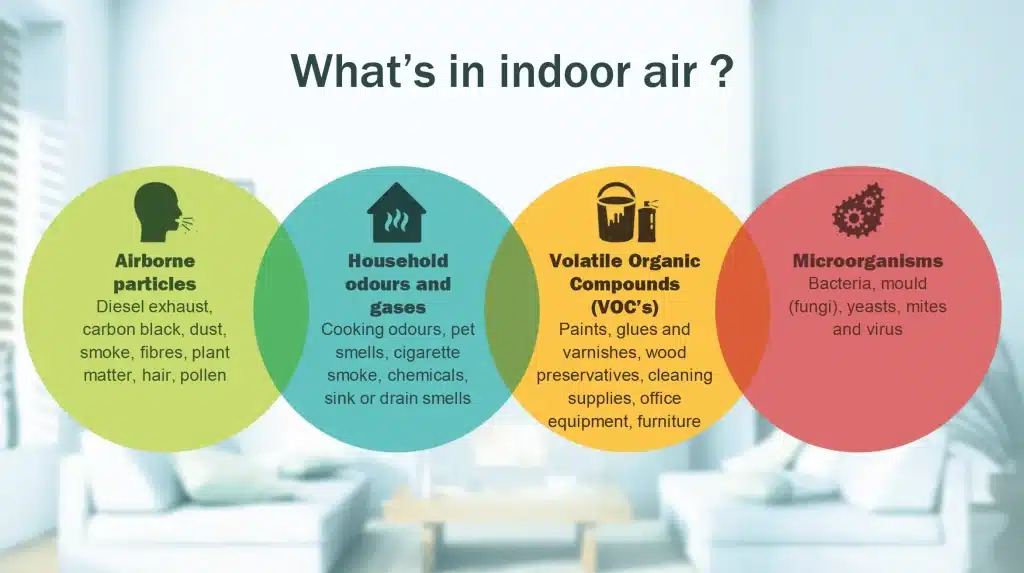
So where does all this stuff come from? The sources of indoor air pollution are everywhere in your home. Gas stoves release nitrogen dioxide when you cook. Carpets and furniture off-gas chemicals for years after purchase. Even your beloved candles add particles to each room.
Mold grows in damp areas and releases spores constantly. Pet dander floats through spaces and settles on surfaces. Dust mites live in bedding and upholstery. I’ve found that most families have multiple sources working against them simultaneously. Identifying your specific sources helps you target solutions effectively.
Health Effects of Poor Indoor Air Quality
Poor indoor air quality creates real health problems. Short-term effects include headaches, fatigue, and irritation in your eyes and throat. You might feel tired all the time without understanding why. Many people blame allergies when their home is actually the cause.
Long-term exposure gets even more serious. Respiratory diseases develop over time from breathing contaminated spaces. Heart problems can worsen with constant exposure to particles. Children and elderly family members face higher risks. I’ve seen families transform their health simply by addressing indoor air quality issues. The connection between clean breathing spaces and wellness is undeniable.
Simple Ways to Improve Indoor Air Quality
Ready for some good news? You can absolutely fix this situation. There are proven ways to improve indoor air quality that work for any budget. Start by opening windows when the weather permits. Fresh outdoor circulation makes a huge difference quickly.
Keep your home clean with regular vacuuming and dusting. Use doormats to trap particles before they enter. Fix any water leaks immediately to prevent mold growth. Control humidity levels between 30 and 50 percent. These basic steps create noticeable improvements in your indoor air quality.
Using an Air Purifier for Better Air Cleaning
An air purifier works wonders for air cleaning in your home. These devices pull contaminated space through filters that trap particles. HEPA filters catch 99.97 percent of particles down to 0.3 microns. That includes dust, pollen, and many bacteria.
I recommend placing units in bedrooms and living areas. Run them continuously for best results. Change filters according to the manufacturer’s instructions. A quality air purifier removes what regular cleaning misses. Combined with other strategies, these machines significantly boost your indoor air quality levels.
Other Ways to Improve Your Indoor Air Quality
Beyond purifiers, several other methods help improve your indoor air quality. Consider these effective approaches:
- Add houseplants that naturally filter your space
- Switch to fragrance-free cleaning products
- Avoid smoking inside your home
- Service your HVAC system annually
- Use exhaust fans when cooking or showering
Each action reduces the pollutant load in your home. I always tell clients to start with two or three changes. Build momentum before tackling everything at once. Small, consistent improvements add up to major results over time.
Trustindex verifies that the original source of the review is Google. My ducks were clean! read to fly in the air. Thanks Air Duck CleaningPosted on GoogleTrustindex verifies that the original source of the review is Google. Exceptional duct replacement service! Courteous staff, quick installation, and fair pricing. They exceeded my expectations. Highly satisfied!Posted on GoogleTrustindex verifies that the original source of the review is Google. I recently used AirTech to unclog my dryer ventilation, sanitize my AC plenum, and reseal some leaky areas around my AC plenum. The tech who came out, Sergio, was amazing. He explained everything very well and took pictures of the inside of my AC and dryer ventilation to show the difference his service made. Sergio was very friendly, showed up right on time, and was able to answer any questions that came up. The price that AirTech charged was very reasonable and way better than some other companies I called. I would not hesitate to call them again for anything HVAC related.Posted on GoogleTrustindex verifies that the original source of the review is Google. Technician was very professional and the company was very upfront with charges. He cleaned the commercial vents. I'd recommend them to anyone looking for commercial vents cleaning!Posted on GoogleTrustindex verifies that the original source of the review is Google. AirTech - Air Vent Cleaning was able to get me in asap because my parents are coming in from out of town and my father has COPD and half of his lung is missing. They were on time professionals and kept me informed during the process. They did a great job and left everything clean and neat when they were done. I recommend them to anyone who wants to get their ducts, and furnace cleaned and sanitized. Thank you!Posted on GoogleTrustindex verifies that the original source of the review is Google. Great experience with AirTech - Air Vent Cleaning. Scheduling was easy and appreciated the reminder calls. AirTech - Air Vent Cleaning Specialists arrived promptly and thoroughly explained the process. Both were very courteous and kindly used shoe covers while in my home. They very efficiently completed the service and shared before and after photos of the ducts that were serviced. Price was reasonable and service was provided with the utmost professionalism. Thanks!Posted on GoogleTrustindex verifies that the original source of the review is Google. AirTech - Air Vent Cleaning Techs were professional and pleasant to deal with. They did a good job of caring for my home by using drop cloths as needed and wore protective "booties". Duct, vent and furnace cleaning went well.
Common Indoor Air Pollutants to Watch For
Knowing your enemy helps you fight effectively. Common pollutants include volatile organic compounds from paints and adhesives. Carbon monoxide from fuel-burning appliances is extremely dangerous. Radon seeps up from the soil beneath foundations silently.
Formaldehyde hides in pressed wood products and some fabrics. Particulate matter comes from cooking, smoking, and burning candles. Each air pollutant requires specific solutions for removal. Testing your home reveals exactly what you’re dealing with. Professional assessments identify problems you might never notice yourself.
Get A Free Estimate

Meeting Air Quality Standards at Home
Professional air quality standards exist for good reason. While residential spaces aren’t regulated like workplaces, those benchmarks still matter. You deserve breathing conditions at least as good as those in any office building.
Monitor your carbon monoxide and radon levels regularly. Keep humidity controlled to prevent mold growth. Ensure proper ventilation throughout your living space. Replace HVAC filters every one to three months. Meeting reasonable air quality standards protects everyone under your roof. Your indoor air quality directly impacts how your family feels daily.
Taking Control of Your Indoor Air Quality
Here’s what I want you to remember. Your indoor air quality matters enormously for your health. The problems are fixable with consistent effort and smart choices. You don’t need expensive equipment or major renovations.
Start assessing your home today. Identify your sources of indoor air pollution first. Then implement solutions one step at a time. Your family deserves clean, healthy breathing spaces. Taking control of your indoor air quality is one of the best investments you’ll ever make. Trust me, you’ll feel the difference within weeks.
Proudly Serving
These Areas
- Orlando, FL
- Lake Nona, FL
- Dr. Philips, FL
- Hunter's Creek, FL
- Heathrow, FL
- Oviedo, FL
- Baldwin Park, FL
- Saint Cloud, FL
- Kissimmee, FL
- College Park, FL
- Windermere, FL
- Winter Park, FL
At Air Duct Cleaning AP, we are committed to providing high-quality air duct services to homes and businesses throughout Orlando. With years of experience in the industry, our team of skilled professionals ensures your HVAC system operates efficiently and delivers clean fresh air.
We specialize in air duct cleaning, installation, inspection, repair, replacement, UV light installation, and sealing, using state-of-the-art equipment and advanced techniques. Our goal is to improve indoor air quality, enhance energy efficiency, and create a healthier living and working environment for our customers.
FAQ
Q: How do I know if my home has poor indoor air quality?
A: Watch for symptoms like frequent headaches, fatigue, or respiratory irritation. If problems improve when you leave home, that’s a clue. Musty odors or visible mold indicate issues. You can purchase home testing kits or hire professionals for thorough assessments. Many people live with poor conditions without realizing the connection to their symptoms.
Q: How long does it take to improve indoor air quality?
A: Some changes work immediately. Opening windows creates an instant improvement in ventilation. Running an air purifier shows results within hours. However, removing sources like mold or replacing off-gassing furniture takes longer. Most homes see significant improvement within two to four weeks of consistent effort.
Q: Are expensive air purifiers worth the investment?
A: Quality matters more than price alone. A mid-range HEPA purifier often performs excellently. Look for certified units with appropriate room coverage. Expensive doesn’t always mean better filtration. Read reviews and check filter replacement costs before buying. A $200 unit often works just as well as premium options.
Q: Can houseplants really help filter indoor air?
A: Houseplants provide modest benefits for indoor spaces. They absorb some pollutants and release oxygen naturally. However, they can’t replace mechanical filtration or proper ventilation. Consider plants as one small part of your strategy. Spider plants, pothos, and peace lilies are popular choices for their filtering abilities.
Q: How often should I change my HVAC filter?
A: Standard filters need replacement every 30 to 90 days. Homes with pets or allergies benefit from monthly changes. Higher-quality filters last longer but cost more upfront. Check your filter monthly by holding it up to the light. If light doesn’t pass through easily, it’s time for replacement.
Q: Should I get professional air quality testing done?
A: Professional testing makes sense for specific concerns. Radon testing is essential and relatively inexpensive. Mold assessment helps if you suspect hidden growth. General testing provides baseline measurements for comparison later. If your family experiences unexplained health issues, a professional evaluation offers valuable answers and peace of mind.