

UV Light Installation Cost in College Park FL (2026): What Homeowners Should Expect
June 23, 2026
- By
- Air Duct Cleaning AP
- HVAC Air Quality Specialists
Musty air coming from vents, recurring mold around supply registers, and unexplained allergy flare-ups often point to biological growth inside the HVAC system. At Air Duct Cleaning AP, we’ve helped homeowners understand UV Light Installation Cost in College Park FL (2026) after years of experience working in humid attic and closet-mounted air handlers. We’ve noticed many systems in College Park struggle with moisture buildup on evaporator coils, especially during long cooling seasons. Ignoring that moisture can lead to microbial growth that spreads through ductwork and impacts indoor air quality. One homeowner near College Park delayed installing a UV solution and ended up replacing a corroded coil months later. Understanding how UV lights work – and what they realistically cost – helps prevent expensive HVAC damage and ongoing air quality issues. If you’re already exploring air duct cleaning in College Park, this guide explains how UV systems fit into the bigger picture.
Best Practices That Protect Performance and Safety
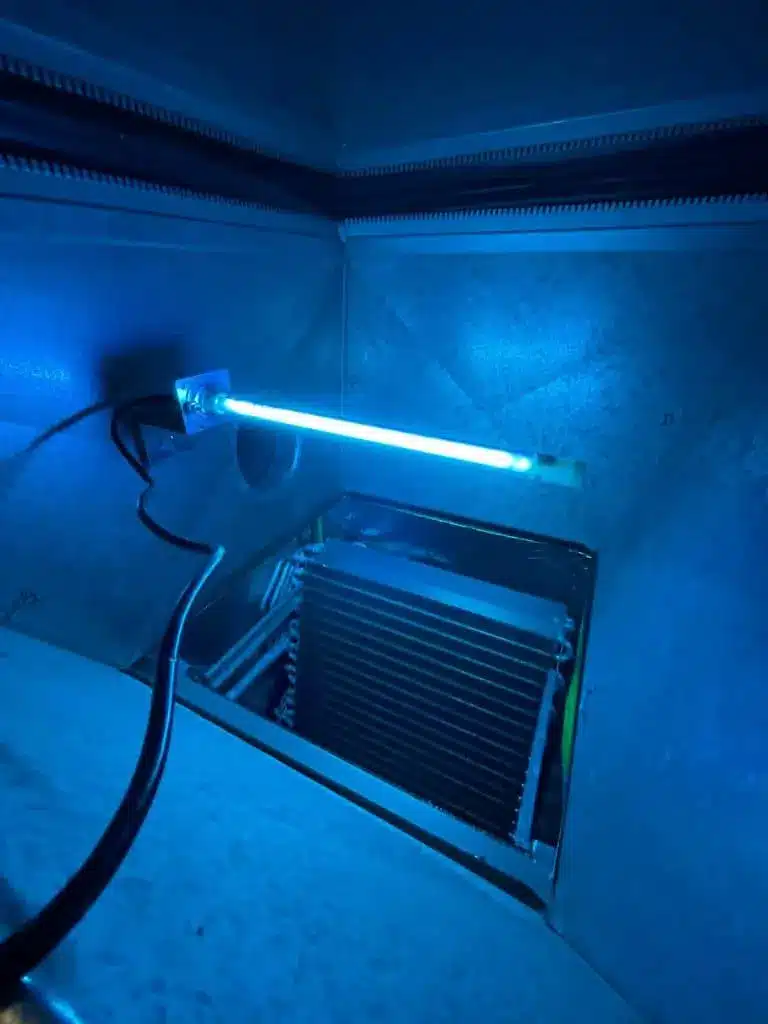
Effective UV installations require precise placement, electrical safety, and correct lamp sizing. We focus on coil irradiation systems designed to operate continuously, not quick add-ons attached without load calculations. According to manufacturer guidelines from leading HVAC equipment suppliers and requirements under the National Electrical Code (NEC) Article 410 for luminaires installed in air-handling spaces, UV systems must be properly enclosed and wired with dedicated disconnects where required. A professional-grade installation should include:
- Verification of coil dimensions to match UV lamp length and output (measured in microwatts per square centimeter).
- Mounting hardware rated for air handler environments.
- Sealed access panels to prevent UV exposure leaks.
- Electrical connections compliant with NEC standards.
- Post-installation amp draw and ballast testing.
Understanding Cost Ranges and Ongoing Upkeep
UV Light Installation Cost in College Park FL (2026) typically depends on system type and access conditions. For a single-lamp coil irradiation system, pricing may range from $600 to $1,200 installed. Dual-lamp or air-stream purification systems can range from $1,200 to $2,500 depending on configuration. Installation usually takes 2 – 4 hours in accessible closet units and longer in tight attic spaces. Costs fluctuate based on:
- Site complexity and ease of air handler access.
- Material costs, including lamp type and ballast quality.
- Total scope, such as combining UV with coil cleaning or drain line upgrades.
Schedule a UV System Assessment
If persistent odors, allergy flare-ups, or recurring coil contamination are affecting your home, the next step is a professional evaluation. We assess humidity levels, inspect coil condition, and determine whether UV installation is appropriate for your HVAC system. Our team explains realistic cost ranges, code requirements, and maintenance schedules so you can make an informed decision. A properly installed UV system can protect coil performance, improve indoor air quality, and reduce the likelihood of repeated cleanings. We provide written recommendations and clear scope details after an on-site inspection in College Park. If you’re considering UV technology as part of a broader indoor air strategy, we’re ready to help you plan it correctly.
FAQs
How much does UV light installation typically cost in College Park?
UV Light Installation Cost in College Park FL (2026) usually depends on system type and accessibility. A basic single-lamp coil irradiation system may fall between $600 and $1,200 installed. More advanced in-duct air purification systems with higher output lamps and reflective chambers can reach $1,200 to $2,500. Homes with attic-mounted air handlers may cost more due to limited workspace and additional electrical routing. College Park’s humidity makes UV systems particularly valuable for preventing coil contamination, which can otherwise lead to efficiency losses and repeat cleanings. Annual lamp replacement, typically $100 to $250 including labor, should also be factored into long-term budgeting. An on-site inspection provides the most accurate estimate.
Are UV lights safe to use inside an HVAC system?
Yes, when installed correctly. UV-C lamps used in HVAC systems operate at approximately 254 nanometers and are mounted inside sealed air handlers or duct sections. Proper installation ensures no UV exposure leaks into occupied spaces. Systems must comply with electrical safety standards under the National Electrical Code, and access panels should include safety interlocks or warning labels. The main safety concern arises from improper mounting or exposed wiring. Professionally installed systems are designed to operate continuously without affecting airflow or producing ozone, provided the lamp type is ozone-free. We recommend verifying that the product specification confirms zero ozone emission to protect indoor air quality.
What factors affect the final installation price and timeline?
The total investment may vary depending on site complexity, material costs, and total scope of work. Tight attic access in College Park can increase labor time, while higher-output dual-lamp systems raise material expenses. Combining UV installation with coil cleaning or drain line upgrades can also affect the overall price. Most installations typically take 2 – 4 hours, though difficult access could extend that timeframe. Pricing may start around $600 for basic systems and fluctuate upward for advanced configurations. These figures are preliminary benchmarks for informational purposes only and do not constitute a binding quote. An on-site evaluation is required for a final proposal.
Can homeowners install a UV light system themselves?
Some DIY kits are available, but installation involves electrical wiring, air handler access, and correct lamp placement. Improper mounting distance can significantly reduce effectiveness, and incorrect wiring may create fire or shock hazards. UV exposure to skin or eyes is another risk if panels are not sealed properly. Manufacturer guidelines often specify mounting distances and electrical requirements that must be followed to maintain warranty coverage. For homeowners comfortable working with HVAC electrical components and understanding NEC compliance, limited DIY may be possible. However, most College Park homeowners benefit from professional installation to ensure safe wiring, proper lamp intensity, and documented compliance.
How do I know when a UV lamp needs replacement?
A UV lamp can still glow blue while producing insufficient germicidal output. Most manufacturers recommend replacement every 9 – 12 months because UV intensity degrades over time. Signs of decline include recurring odors, visible coil buildup, or increased allergy symptoms despite a functioning system. Some advanced units include indicator lights or timers to track runtime hours. During annual HVAC maintenance, technicians can measure coil condition and verify ballast performance. In College Park’s long cooling season, heavy system use makes annual replacement especially important. Scheduling bulb replacement alongside routine AC service keeps the system operating at full effectiveness.
Why are UV systems common in College Park homes?
College Park’s humid climate creates ideal conditions for microbial growth on evaporator coils. Long cooling seasons mean coils stay wet for extended periods, especially if indoor humidity exceeds 55%. Many homes also have attic-mounted air handlers, where high temperatures and condensation cycles accelerate buildup. We’ve seen repeated coil contamination in systems without UV protection, even after thorough cleanings. Installing UV lights helps control biological growth directly at the source. Homes with allergy-sensitive occupants often report noticeable improvements once microbial contamination is addressed at the coil level.
What should I look for when hiring a UV installation professional?
Look for contractors familiar with HVAC electrical codes and manufacturer placement guidelines. Proper licensing, liability insurance, and documented compliance with the National Electrical Code are essential. Ask whether the installer measures coil dimensions and verifies lamp intensity rather than selecting a one-size-fits-all product. Written scope details and maintenance recommendations indicate thorough service. Technicians should also evaluate humidity control and airflow before recommending UV, since underlying moisture problems must be addressed. A professional should explain expected lamp lifespan and replacement intervals clearly.
Is UV installation urgent if I notice mild odors?
Mild odors are not typically an emergency, but they can signal biological growth inside the air handler. The appropriate step is to schedule an inspection rather than waiting for the issue to worsen. Ignoring persistent odors may allow buildup to spread across coil surfaces, reducing efficiency and potentially damaging components. In the meantime, replace HVAC filters and check that the drain line is clear. If odors intensify when the AC starts or if allergy symptoms increase, scheduling a professional evaluation in College Park is advisable. Early intervention usually costs less than repeated cleanings or coil replacement.